

Businesses today are investing considerable effort in streamlining operations, maintaining customer satisfaction, and controlling costs. But with the rising pressure to stay competitive and eco-friendly, it’s becoming harder to stay ahead. That’s why embracing AI is more important than ever.
If you’re wondering how AI automation drives sustainable business growth, you’re in the right place. That’s especially true in healthcare, where physical therapists using Spry’s AI-powered tools have seen real growth by automating clinical workflows, reducing admin load, and freeing up more time for patient care.
I’ve been taking a closer look at the current business landscape, and it’s clear that growth is accelerating, competition is intensifying, and traditional strategies aren’t keeping up.
In this post, I’ll share how AI automation drives sustainable business growth and how you can utilize it to build stronger, greener businesses.
Let’s jump right in!
How AI Automation Drives Sustainable Business Growth
Businesses are embracing AI now more than ever. In fact, 78% of them have already embraced it to power different functions that drive sustainable growth.
Well, growth isn’t just about speed but also about building a lasting business. Here’s how AI automation drives sustainable business growth:
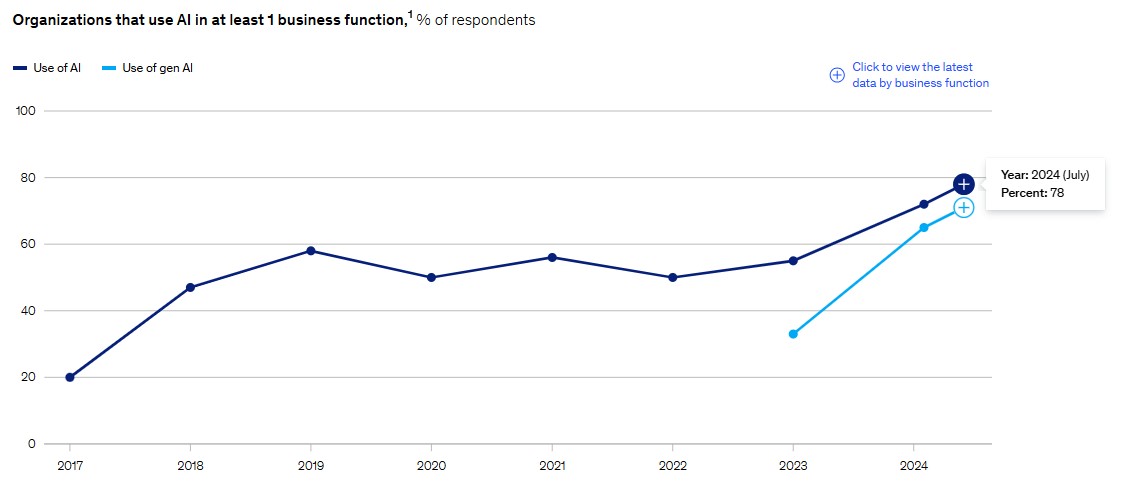
Image via McKinsey
1. Improves Operational Efficiency
One of the best examples of how AI automation drives sustainable business growth is its ability to optimize operational efficiency. In many industries, routine tasks such as data entry, written communication, or document duplication are incredibly time-consuming.
In fact, data shows that teams spend 62% of their workday on repetitive tasks. Businesses that embrace AI automation witness significant improvements in operational efficiency. AI automation relieves your workload and completes tasks with fewer errors.
And the best part? It helps cut costs and waste, making your business more efficient and sustainable. By automating repetitive tasks, companies can enhance workflows, optimize resource allocation, and streamline the overall experience, as BCG has discovered.

Image via BCG
2. Accelerates Content Creation and Distribution
In 2025, brands are expected to create content more quickly, consistently, and across a wider range of platforms. Creating content manually while meeting these demands is easier said than done.
Here, we see yet another clear example of how AI automation drives sustainable business growth with smart content marketing. AI can create and share visual and textual content. It can also analyze performance data and edit content in real time.
A recent survey found that AI can also help repurpose content, thereby minimizing resource usage.
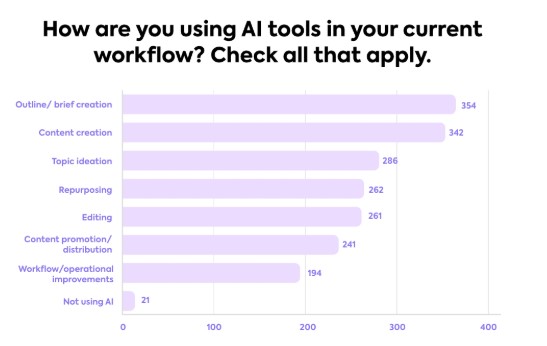
Image via Minuttia
3. Enhances the Customer Experience
Another standout example of how AI automation drives sustainable business growth is its impact on the customer experience. As customer expectations evolve, so do the tools designed to meet them.
AI-powered service desk software is helping support teams manage and resolve issues more efficiently, enabling faster responses and more consistent service across all touchpoints. These tools facilitate more seamless and personalized interactions, keeping customers satisfied and engaged.
Additionally, Customer service automation, facilitated by smart chatbots and virtual assistants, enables businesses to deliver 24/7 support and personalized services.
In e-commerce, AI automation powers dynamic pricing models and tailored product suggestions. Businesses that utilize AI to connect meaningfully with their customers are experiencing increased loyalty, higher conversion rates, and improved retention.
 Image via Genesys
4. Streamlines Supply Chain and Inventory Management
Here’s the thing—your supply chain can either fuel growth or drain resources. One of the clearest examples of how AI automation drives sustainable business growth in 2025 is in supply chain forecasting, where AI outperforms outdated, manual planning methods and guesswork.
AI automation continuously analyzes real-time variables like weather disruptions, global events, supplier reliability, and shifting customer demand. It doesn’t rely solely on historical data—it adapts to current events. This means businesses can predict demand with remarkable accuracy, avoiding overproduction, unnecessary warehousing, and last-minute scrambles.
By automating supply chain forecasting and inventory management, companies can reduce waste, optimize storage, and enhance supplier coordination. The result? Lower operational costs, fewer stockouts or excess inventory, and a supply chain that’s more resilient and responsive to change.
In short, AI helps build smarter, leaner supply chains, laying the groundwork for sustainable and scalable business growth.
5. Enables Smarter, Data-Driven Decision Making
With automation handling the heavy lifting behind the scenes, businesses can now analyze massive amounts of data in real-time. Whether it’s forecasting demand or spotting risks before they become problems, AI gives you a clearer picture of what’s coming next.
Instead of blindly launching a campaign and hoping it lands, AI can help marketing teams predict which content will perform best and generate leads.
To find the best lead generation software, look for platforms that integrate seamlessly with your existing tools and offer real-time data analysis.
AI helps your support team focus more on other important business matters. This level of efficiency clearly outlines how AI automation drives sustainable business growth. When you know what’s likely to happen, you can plan better and respond confidently.
6. Improves Employee Productivity and Job Satisfaction
We all know that productivity isn’t just about doing more—it’s about doing what matters most. And that’s where AI automation is making a real impact in today’s workplace.
When discussing how AI automation drives sustainable business growth, we often focus on cost savings and increased output. But there’s a human side to this story that’s just as important.
Tools like product feedback software help teams collect and analyze customer insights efficiently, allowing businesses to prioritize the features and improvements that truly matter, making productivity not just faster, but smarter.
With AI automation, routine responsibilities can be handled more efficiently, freeing up employees to focus on problem-solving, brainstorming, or developing client relationships—all things that contribute directly to business growth.